Stay Updated on Space Science
Read our newsletter to receive the latest articles, discoveries, and insights in astrophysics and space research.
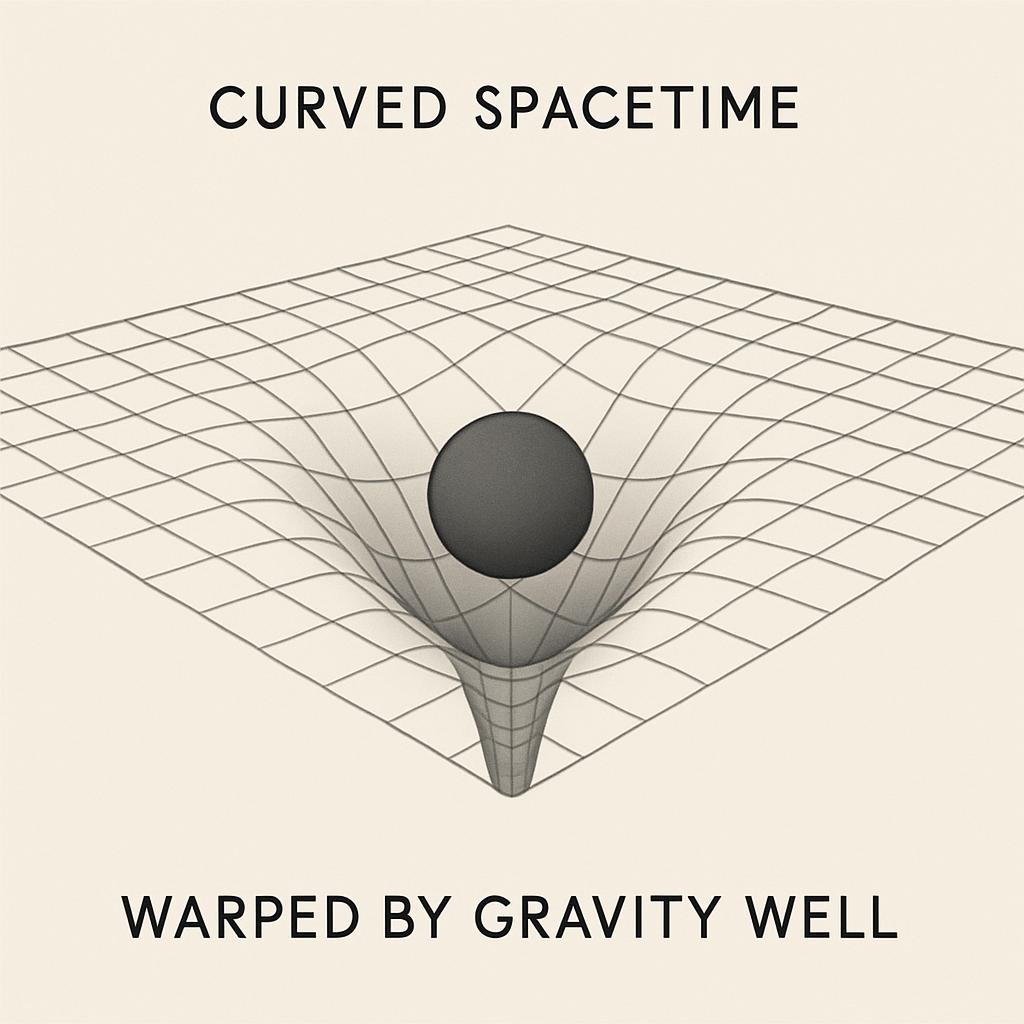
Gravitational Lensing of Supernova “SN Winny”
ScienceDaily / Technical University of Munich
Astronomers have identified a rare superluminous supernova, nicknamed “SN Winny,” located 10 billion light-years away. Due to gravitational lensing by two foreground galaxies, the supernova appears five times in the sky. By measuring the time delays between these appearances, scientists hope to calculate the universe’s expansion rate and resolve the “Hubble tension.
Caltech’s “Bright Harvest” Milestones in SBSP
Caltech Space Solar Power Project
Caltech recently premiered “Bright Harvest,” showcasing the successful demonstration of space-based solar energy beamed wirelessly to Earth. The project utilizes ultra-light, foldable 2D integrated elements that collect sunlight and convert it to RF electrical power. This modular architecture allows for scalable orbital power stations that provide continuous clean energy regardless of weather
Space-Based Solar Power Market Surge
Research and Markets
A new industry report highlights that the space-based solar power market has grown to $1.89 billion in 2026. The growth is driven by advancements in microwave power transmission and government-funded demonstration programs. The focus is shifting toward large-scale orbital arrays to provide baseload power as part of global net-zero transitions.
Discovery of Comet C/2025 R3
NASA Jet Propulsion Laboratory (JPL)
A bright new comet, C/2025 R3, made its closest approach to Earth this week, passing within 44 million miles. Astronomers estimate it has reached a magnitude of eight, making it visible with binoculars. It is currently positioned in the eastern sky near the constellations Pegasus and Pisces for Northern Hemisphere observers.
JAXA’s Arctic Sea-Ice Satellite Monitoring
JAXA (Japan Aerospace Exploration Agency)
JAXA released new data from its satellite microwave radiometers showing that Arctic winter sea-ice extent has set a record low in 2026. This long-term monitoring project is critical for understanding global climate shifts. Additionally, JAXA is preparing for the upcoming launch of the 6th H3 Launch Vehicle to further its lunar and orbital capabilities.
Join Our Space Science Community
Stay informed with the latest discoveries and theories in astrophysics and space science. Sign up to connect with fellow space enthusiasts and explore the universe together.
Join Our Space Science Community
Stay informed with the latest discoveries and theories in astrophysics and space science. Sign up to connect with fellow space enthusiasts and explore the universe together.

